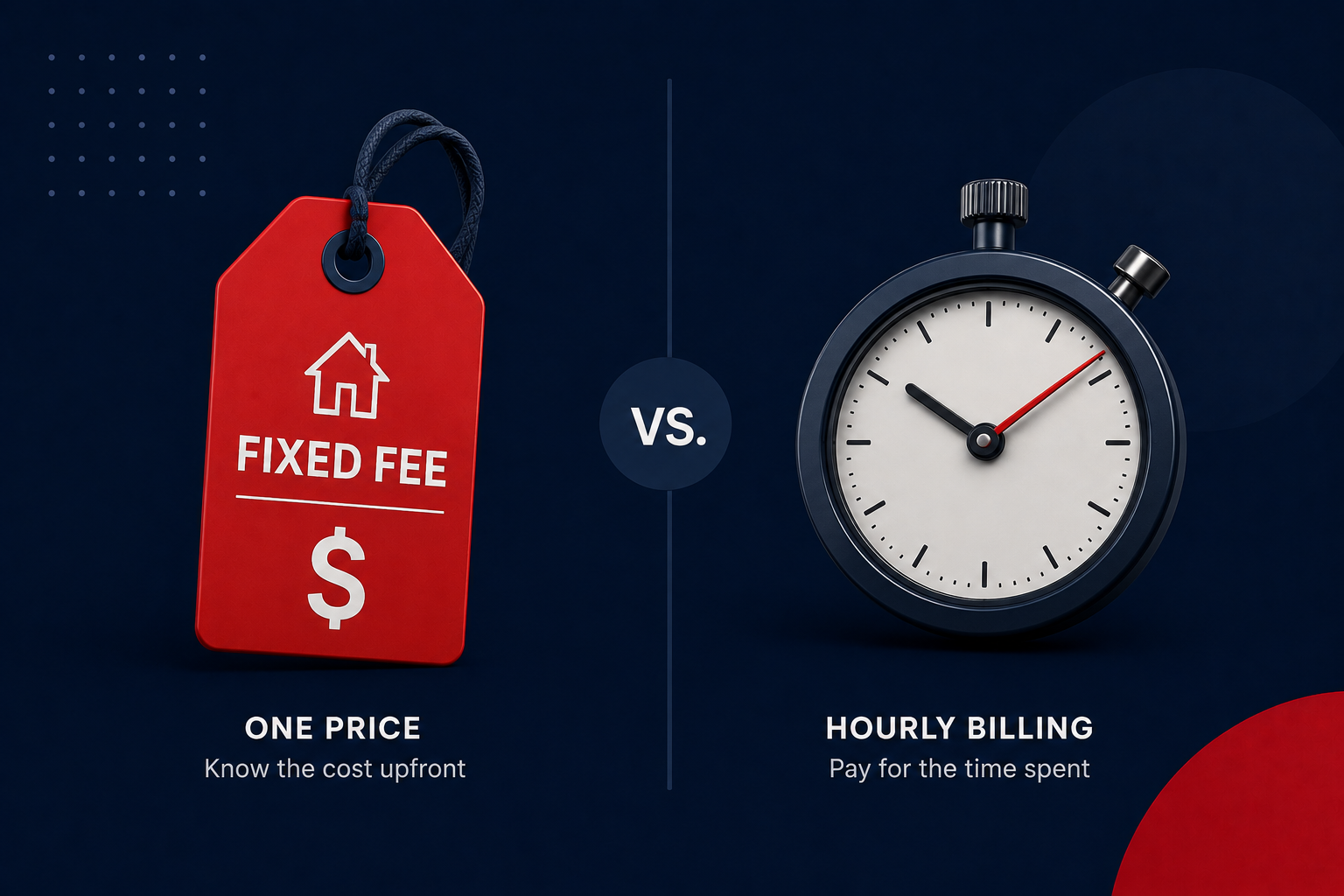
Conveyancers price their work in one of two ways: a fixed fee, or an hourly rate. For a standard residential purchase or sale, the difference matters more than it looks.
Fixed fee — the common model
Most conveyancers quote a single fixed fee for a standard matter. You know the professional cost up front, and it does not change with how many phone calls or emails your transaction takes. This is the model to prefer for an ordinary purchase or sale, because it removes any incentive to run up hours and makes firms genuinely comparable.
The thing to check is what the fixed fee covers. Some quotes cover the full job to settlement; others stop at a point and treat anything extra — a delayed settlement, an additional search, a contract variation — as a separate charge. Ask where the line is.
Hourly — rare, and less predictable
An hourly rate is uncommon for straightforward conveyancing and more typical of a law firm handling a complex matter. It makes your final cost unknowable at the outset, because it depends on how long the work takes. If you are quoted hourly for an ordinary settlement, ask for a cap or a fixed quote instead.
"Fixed fee" that excludes disbursements
Watch for a low fixed fee that quietly excludes disbursements — searches, land registry fees, PEXA. That is not dishonest if disclosed, but it is only comparable once you add those costs back in. Always ask for an all-in estimate.
The questions that protect you
- Is your fee fixed, and exactly what does it cover?
- What happens if settlement is delayed or the contract changes?
- What disbursements will I pay, and are they at cost?
- Can I have the total in writing — your fee plus disbursements — before I engage you?