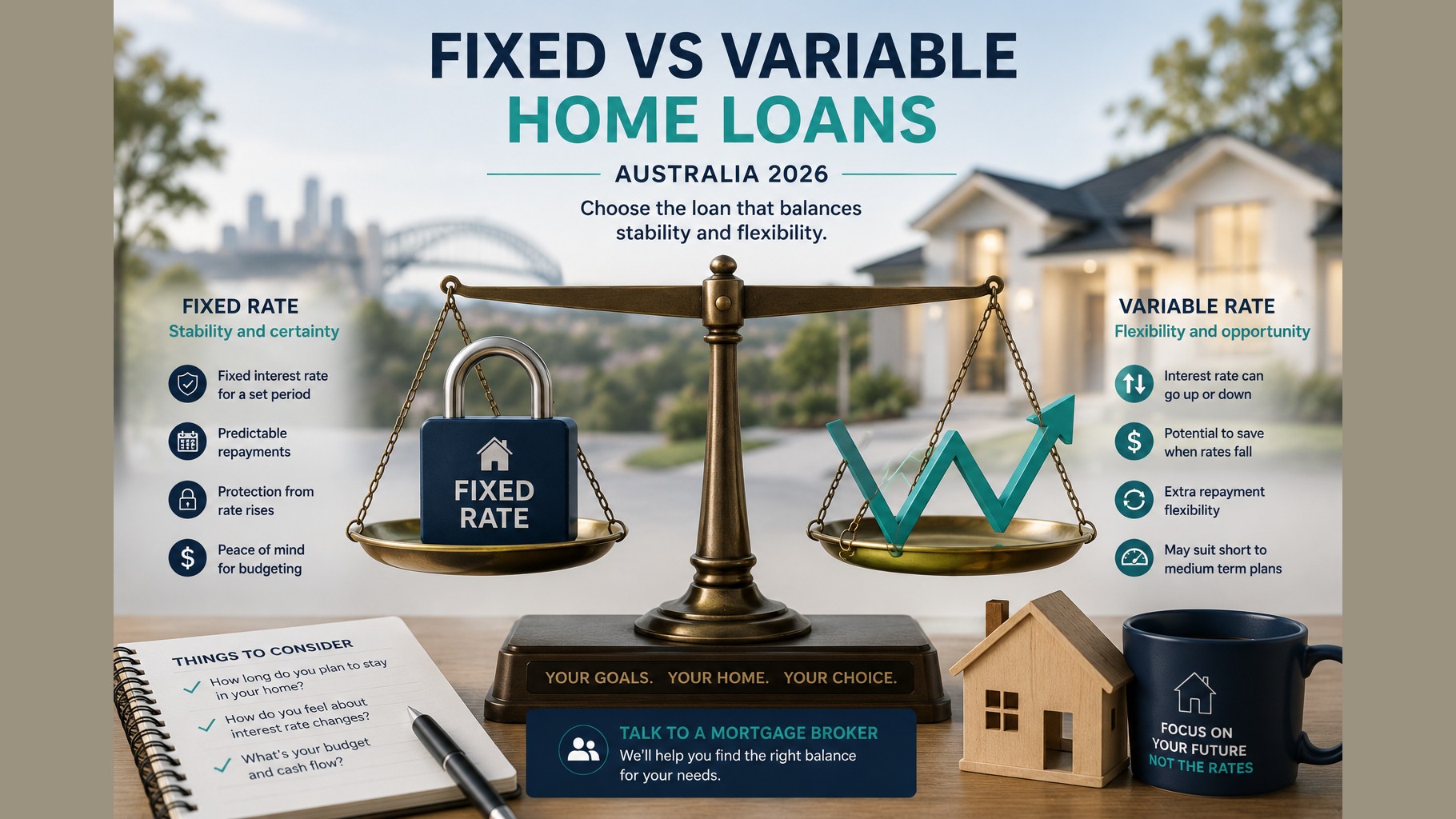
The question everyone asks first is the wrong one
"Which is cheaper, fixed or variable?" is the first thing most borrowers want to know — and it is the least useful place to start, because nobody can tell you reliably. The honest answer depends on where interest rates go over the next few years, and if anyone could predict that with confidence they would not be writing mortgage guides.
The better question is: which type of risk suits your situation? Fixed and variable are not really "cheaper vs dearer" — they are "certainty vs flexibility". Once you frame it that way, the decision gets a lot clearer.
Where rates sit in 2026
As of mid-2026, the RBA cash rate is 4.35% and has been held steady for much of the year, with the next decision due on 11 August 2026. The major banks are split: most expect it to stay put through the rest of 2026, while at least one forecasts a possible rise, and cuts are generally not expected before 2027. The practical takeaway is that we are in a flat, uncertain environment rather than a clearly-falling or clearly-rising one — which is exactly the situation where the fixed-vs-variable decision is genuinely finely balanced, and comes down to you rather than to a forecast.
(Rates and forecasts move. Check the current cash rate and your lender's rates before deciding — this article is a framework, not a rate sheet.)
Fixed: you are buying certainty
With a fixed rate, your repayment is locked for the term — commonly one to five years — regardless of what the RBA does.
It suits you if:- Your budget is tight and a rate rise would genuinely hurt.
- You value knowing your exact repayment and sleeping easily.
- You are on a single income, starting a family, or otherwise want predictability for a defined period.
- Limited extra repayments. Most fixed loans cap how much extra you can pay without penalty, which slows down paying the loan off faster.
- Break costs. If you sell, refinance, or repay early during the fixed term, the "break fee" can be substantial — sometimes thousands.
- Usually no offset, or a weaker one. You lose one of variable's best features.
- You don't benefit if rates fall. Certainty cuts both ways.
Variable: you are buying flexibility
A variable rate moves up and down with the market. Your repayment can rise, but you get features fixed loans typically restrict.
It suits you if:- You want an offset account to park savings against the loan and cut interest.
- You want to make unlimited extra repayments and pay the loan down faster.
- You might sell or refinance in the next few years and don't want break costs.
- You can absorb a rate rise without stress.
Split loans: you don't have to choose
Many borrowers fix part of the loan and leave the rest variable — a 50/50 or 70/30 split, for instance. You get certainty on the fixed portion and an offset and extra repayments on the variable portion. It is a sensible middle path when the decision feels genuinely 50/50, which in the current flat environment it often does. It won't be optimal in hindsight either way — but it caps your regret in both directions.
The questions to ask a broker
- What is the comparison rate (not just the headline rate) on each option?
- What are the break costs if I fix and my circumstances change?
- Does the variable come with a full offset, and what does it cost?
- How much can I overpay on the fixed portion before penalties?
- Given my plans for the next 3–5 years, would you fix, stay variable, or split — and why?
The bottom line
Fixed buys certainty; variable buys flexibility; a split buys a bit of both. In a flat, uncertain 2026 the right answer depends on your budget headroom, your plans, and how much a rate rise would actually affect you — not on guessing the RBA. Work out which risk you would rather carry, then compare brokers and lenders on how well they fit that choice.
CompareMyAgents lists mortgage brokers with verified credentials and real reviews so you can compare who will actually explain the trade-offs. We are independent and take no commission. This is general information, not financial advice — we are not licensed advisers, and your decision should reflect your own circumstances.