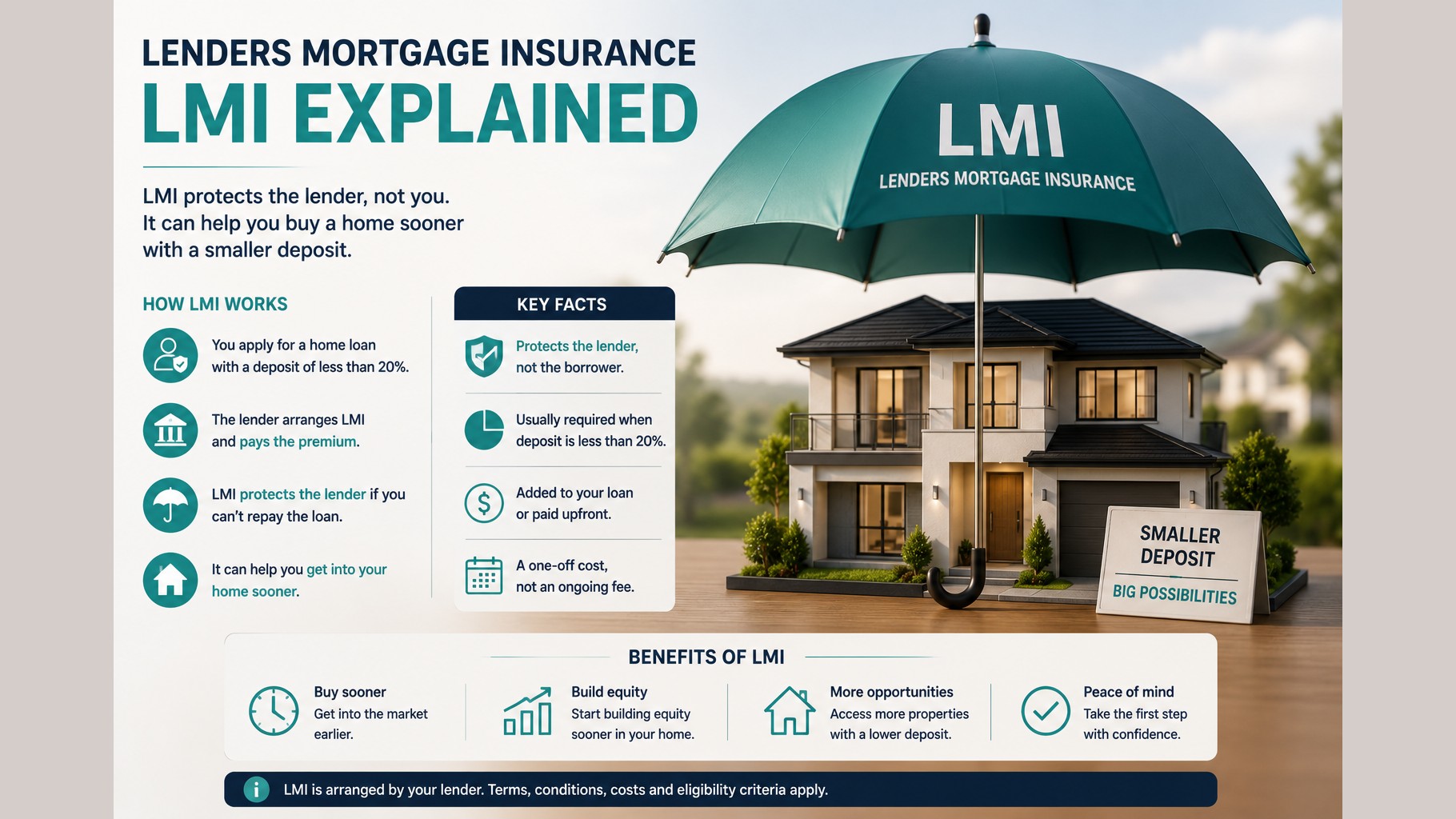
Lenders Mortgage Insurance is one of the biggest costs first-home buyers don''t see coming — and one of the most misunderstood. The single most important thing to know up front: it protects the lender, not you.
What LMI is (and who it protects)
LMI is a one-off insurance premium a lender charges when you borrow with a smaller deposit — typically when your loan is more than 80% of the property''s value. If you later default and the lender loses money, the insurance covers the lender. You pay the premium; the lender gets the protection.
Why it exists
From the lender''s point of view, a smaller deposit is a higher-risk loan. LMI lets them say yes to borrowers who don''t have a 20% deposit, by insuring against that extra risk. Without it, low-deposit lending would be far harder to get — so LMI is also what makes buying sooner possible for many people.
How much it costs
It varies with your loan size and deposit — the smaller your deposit, the higher the premium — and it can run into the thousands or tens of thousands. It''s often added to your loan (so you pay interest on it too), rather than paid upfront. Because it scales with your deposit gap, even a slightly bigger deposit can cut it noticeably.
How to avoid or reduce it
- Save a 20% deposit. The classic route — no LMI at all. But in a rising market, waiting to save 20% can cost more than the LMI would have.
- Use a government scheme. Some first-home buyer guarantees let eligible buyers purchase with a small deposit without LMI. Eligibility and availability change and vary by state — check the current rules.
- A guarantor. A family member using equity in their property as security can remove the need for LMI (with real risks for the guarantor — take advice).
- Some professions get LMI waivers from certain lenders.
Is paying LMI ever worth it?
Sometimes, yes. If property prices are rising faster than you can save, buying now with LMI can beat waiting two years to save a bigger deposit — you get in sooner and stop paying rent. It''s a maths question: run "buy now with LMI" against "wait and save," including likely price growth, before deciding.
The bottom line
LMI is a one-off cost that lets you buy with a smaller deposit, protecting the lender rather than you. You can avoid it with a 20% deposit, a guarantor or an eligible government scheme — but paying it to buy sooner is sometimes the smarter financial move. Do the numbers both ways rather than assuming 20% is always the goal.
This is general information, not credit or financial advice — confirm costs and eligibility with your broker or lender.