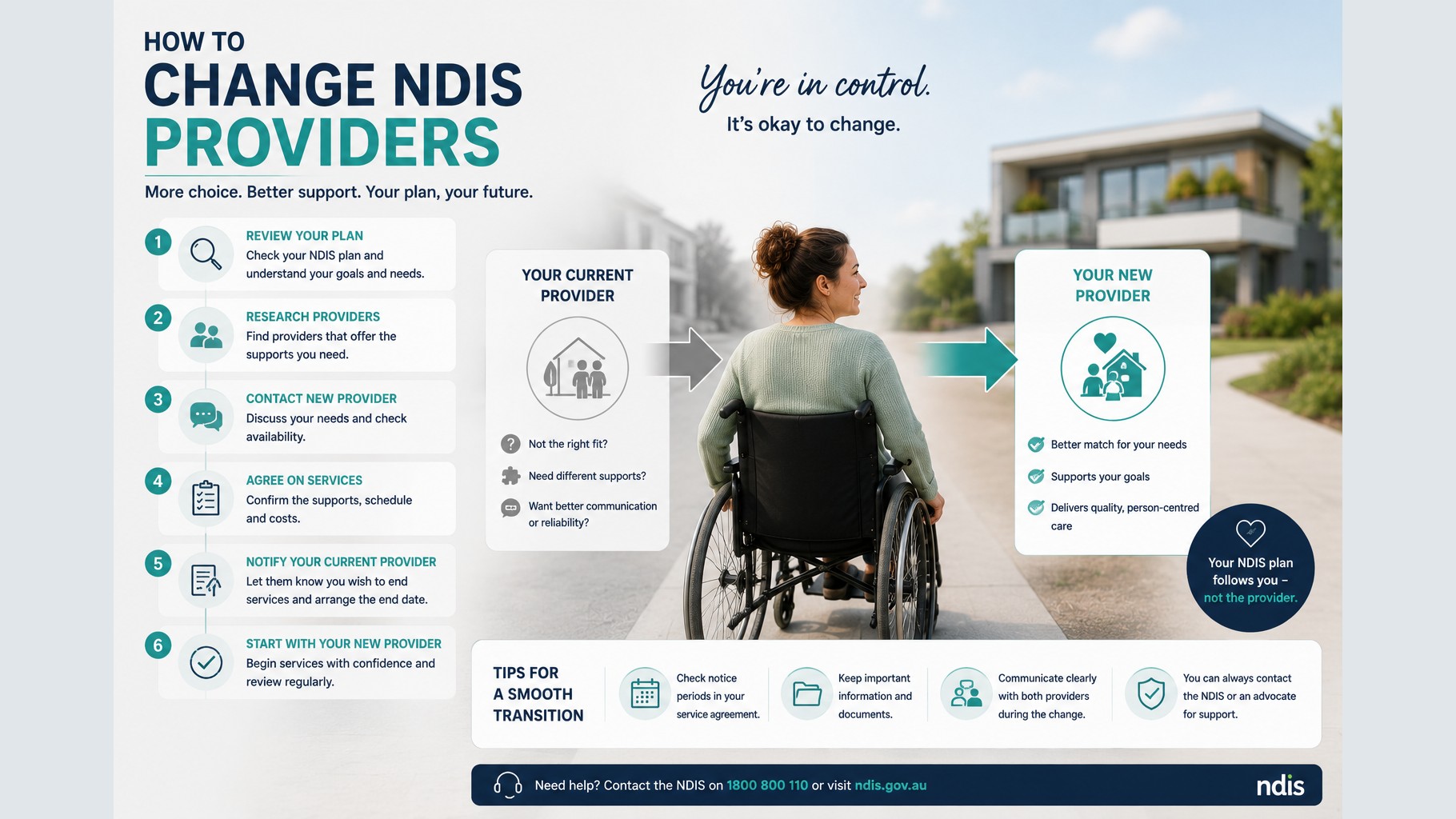
You Are Allowed to Leave
Start with the principle, because many participants have been made to feel otherwise: choice and control are the foundation of the NDIS, and changing providers is a normal, protected part of it. You do not need to justify the decision, you cannot lose your funding for making it, and a provider who makes leaving difficult is demonstrating exactly why you are right to go.
Step 1: Check Your Service Agreement First
Before saying anything, read your agreement''s exit clause. Note the notice period (commonly 2–4 weeks) and any conditions. Two things to know: notice periods bind you to notice, not to silence — you can arrange your next provider during it; and if the agreement''s exit terms are punishing, that itself can be raised with the provider or, if unfair, with the NDIS Commission.
Step 2: Line Up the New Provider Before You Give Notice
The golden rule of switching is overlap: never leave a support gap between providers, especially for daily or personal supports. Shortlist and meet replacement providers first (our guide on the ten questions to ask before signing covers the vetting). Confirm they can start within your notice window, and only then give notice to your current provider — in writing, keeping a copy.
Step 3: Manage the Money Side
Check what has been claimed against your plan before you switch, so the old provider''s final invoices do not surprise you. If you have a plan manager, tell them the switch dates — they will stop paying the old provider after the end date and set up the new one. If you are agency-managed, ending the service booking matters: the old booking can quarantine funds the new provider needs, so ask the old provider to end it promptly, and contact the NDIA if they drag their feet.
Step 4: Transfer the Knowledge, Not Just the Funding
The thing most people forget: your current provider holds practical knowledge about your supports — routines, communication preferences, health protocols, what works. Ask for a handover: copies of your support plans and relevant documents (they are about you; you are entitled to them), and where relationships allow, a handover conversation between old and new teams. If you have a support coordinator, coordinating this transfer is squarely their job.
When It Is Not Just "Not Working Out"
If you are leaving because of something serious — neglect, abuse, unsafe practices, billing you did not authorise — switching providers is not the whole response. Complaints to the NDIS Commission exist precisely for this, they can be made by anyone, and making one does not affect your funding. Switch and report.
The Bottom Line
Changing providers cleanly comes down to sequence: read the exit clause, secure the replacement, give written notice, close the money loop, and insist on a handover. It is administrative, not adversarial — and a fortnight of admin beats years with support that does not fit. Your plan exists to serve you, not any provider''s roster.
This article is general information only — it is not disability, health, legal or NDIS planning advice. Processes change; confirm current details with the NDIA, your plan manager or support coordinator.