Before You Sign Anything
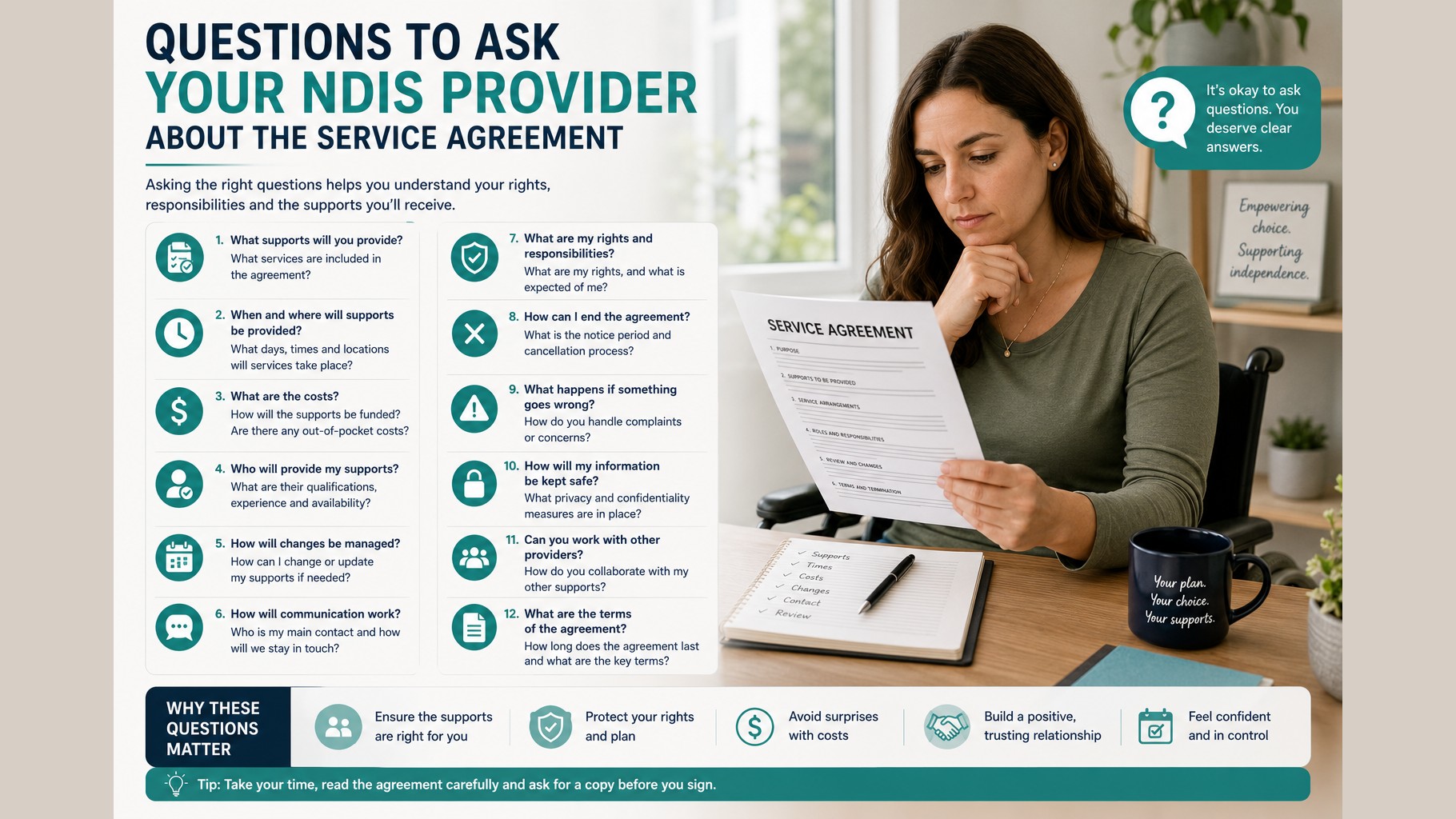
A service agreement sets out what a provider will deliver, what it costs and what happens if things change. Providers vary enormously in how fair these agreements are. Ask these ten questions first — a good provider will welcome every one of them.
1. Are you registered for the exact supports in this agreement? Registration is by support category. Verify on the NDIS Commission register that they are registered for what they are actually contracting to deliver. 2. What are your rates, and do they match the NDIS Pricing Arrangements? Registered providers cannot charge above the price limits in the current NDIS Pricing Arrangements and Price Limits. Ask to see the line items. Vague answers about pricing are a warning. 3. What is your cancellation policy — in both directions? The Pricing Arrangements set rules on short-notice cancellation charges. Ask exactly when you will be charged for cancelling, and what notice the provider gives you when they cancel. Both sides matter. 4. How much notice do I need to end the agreement entirely? Exit clauses are where unfair agreements hide. A month is common; anything long or with exit fees deserves scrutiny. You have the right to change providers. 5. Who will actually support me — and what happens when they are away? Continuity is everything in daily supports. Ask whether you get consistent workers, how cover is arranged, and whether you can request a change of worker without drama. 6. What screening and training do your workers hold? NDIS Worker Screening clearances for risk-assessed roles, plus any training specific to your needs (manual handling, communication methods, health supports). Specific answers, not "all our staff are qualified". 7. How do you involve me in decisions about my supports? The answer reveals the provider''s culture. Listen for choice and control language backed by concrete practice — support plans you co-design, workers you interview, reviews you lead. 8. How do I raise a problem, and what happened the last time someone did? Every provider has a complaints process on paper. The second half of the question is the real test — a provider who can describe an actual complaint and what changed because of it is one that treats feedback seriously. 9. What exactly will you claim from my plan, and how will I see it? Whether agency-managed, plan-managed or self-managed, you are entitled to know what is being claimed against your funding. Ask how you will see statements and how billing errors get fixed. 10. Can I take this agreement away and read it before signing? Always yes. Any pressure to sign on the spot — at a home visit, at an expo, after a "special offer" — is reason enough to walk away. Take it away, read the exit and cancellation clauses twice, and ask someone you trust.The Bottom Line
Service agreements formalise a relationship that operates in your home and your life — you are allowed to be demanding about it. Providers who answer these ten questions openly are showing you their culture before you commit. And nothing in an agreement removes your rights to complain to the provider, to the NDIS Commission, or to leave.
This article is general information only — it is not disability, health, legal or NDIS planning advice. Pricing rules change; check the current NDIS Pricing Arrangements and seek advice on any agreement you are unsure about.